Heidi Tournoux
Artist | Painter, Mixed-Media Artist & Ceramic Sculptor
Preserving memories. Exploring the human experience. Making space for stories that deserve to be told.
I make art because it tells the stories that often go untold and become forgotten.
As a 2D artist working primarily in painting, drawing, and mixed media, I am drawn to the challenge of capturing a moment, a feeling, or an experience and giving it a life beyond the moment itself. My work begins with curiosity: the way light falls across a string of camping lights, the colors of the orange roses my daughter chose at the grocery store, or the unexpected beauty of an ordinary day with my family. These are the moments I want to preserve.
Over time, my artistic practice has grown to include ceramic sculpture, allowing me to explore more personal and complex subjects through form, texture, and physical presence. Across these different media, my work is connected by a central interest in storytelling: what we remember, what we carry, and what deserves to be seen.
Based in North Texas, I am an artist, board-certified and registered art therapist, licensed professional counselor supervisor, and advocate for artists and creative communities. My work reflects a lifelong belief that art helps us understand ourselves, connect with others, and preserve the experiences that make us who we are.
The Art of Remembering
Art has always offered me a place to quiet the noise around me. As a child, drawing gave me a way to focus, explore, and spend time in my own thoughts. One of my earliest memories of feeling recognized as an artist came when my grandmother complimented my drawing. She was not someone who gave praise casually, and her words stayed with me.
Today, the process of making art offers that same sense of stillness. Whether I am working through a color problem on paper or exploring a more complicated idea in the studio, creating allows me to enter a state of concentration where questions can unfold and solutions can emerge.
My 2D work often begins with a photograph or a memory, but the goal is not simply to reproduce what I see. I am interested in capturing what a moment felt like and translating that feeling through color, composition, light, and mark-making.
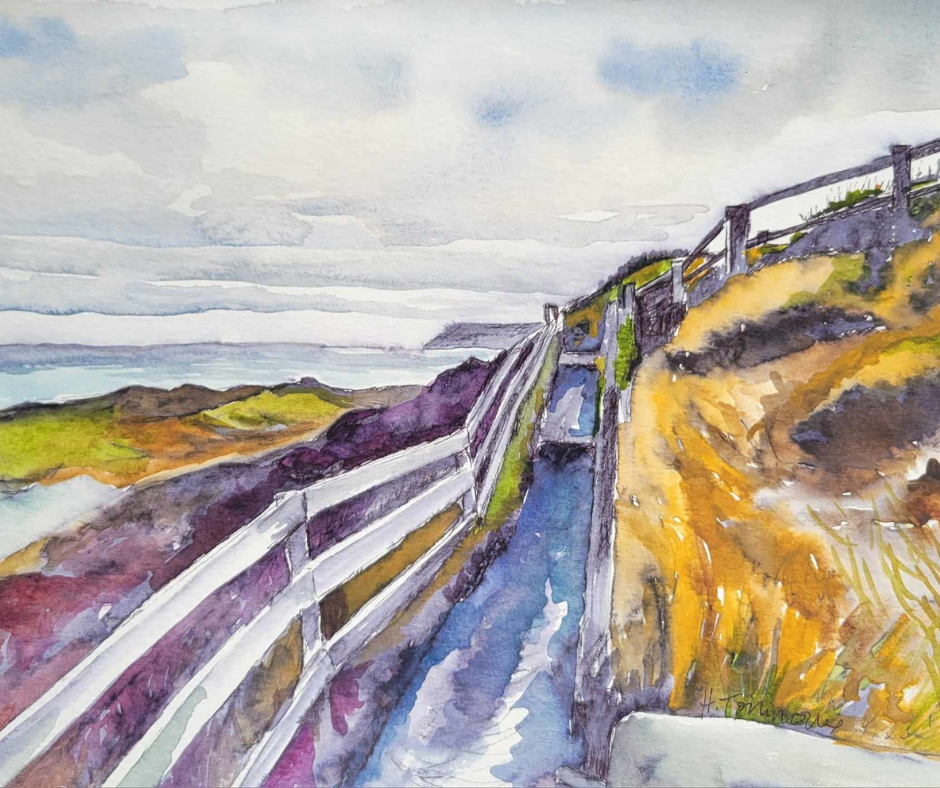
My floral paintings preserve memories of choosing flowers with my daughter, Gloria. A watercolor of camping lights recalls the joy of decorating a campsite and spending time outdoors with my family. These works remind me that our lives are shaped not only by major milestones, but also by small moments that might otherwise fade with time.
Painting gives those experiences a place to live. It allows a memory to become something tangible, something another person can encounter and perhaps connect with through their own experiences.
From the painted surface to the sculpted form
My growing interest in ceramic sculpture has opened new ways for me to explore the ideas that have always interested me as an artist. I enjoy the problem-solving inherent in making art, whether that means capturing light on a two-dimensional surface or discovering how a sculptural form can communicate a complicated human experience.
In my earlier work, I often approached art through the challenge of making an image or object successful. Increasingly, I find myself drawn to work that carries greater personal meaning. I am interested not only in what an artwork looks like, but also in what it holds, what it conceals, and what it asks us to consider.
This evolution has brought me back to the human figure, an interest that began during my college years with ceramic studies of the torso and paintings of the female form. In recent years, I have returned to that subject with a different understanding of my own experiences and the world around me.
My ceramic work now explores women’s bodies, trauma, motherhood, hormonal changes, and the complicated realities of being a woman. These sculptures extend the storytelling that runs through my 2D work, using a different physical language to explore what we remember, what we endure, and what remains beneath the surface.
Stories that deserve to be seen
My recent ceramic works address experiences that are often difficult to discuss openly. The Blame We Claim, Barbed Becoming, and Bloom From the Break form a sculptural triptych exploring the process of living through and healing from trauma. Together, they acknowledge that healing takes time and that the effects of painful experiences can remain long after visible wounds have healed.
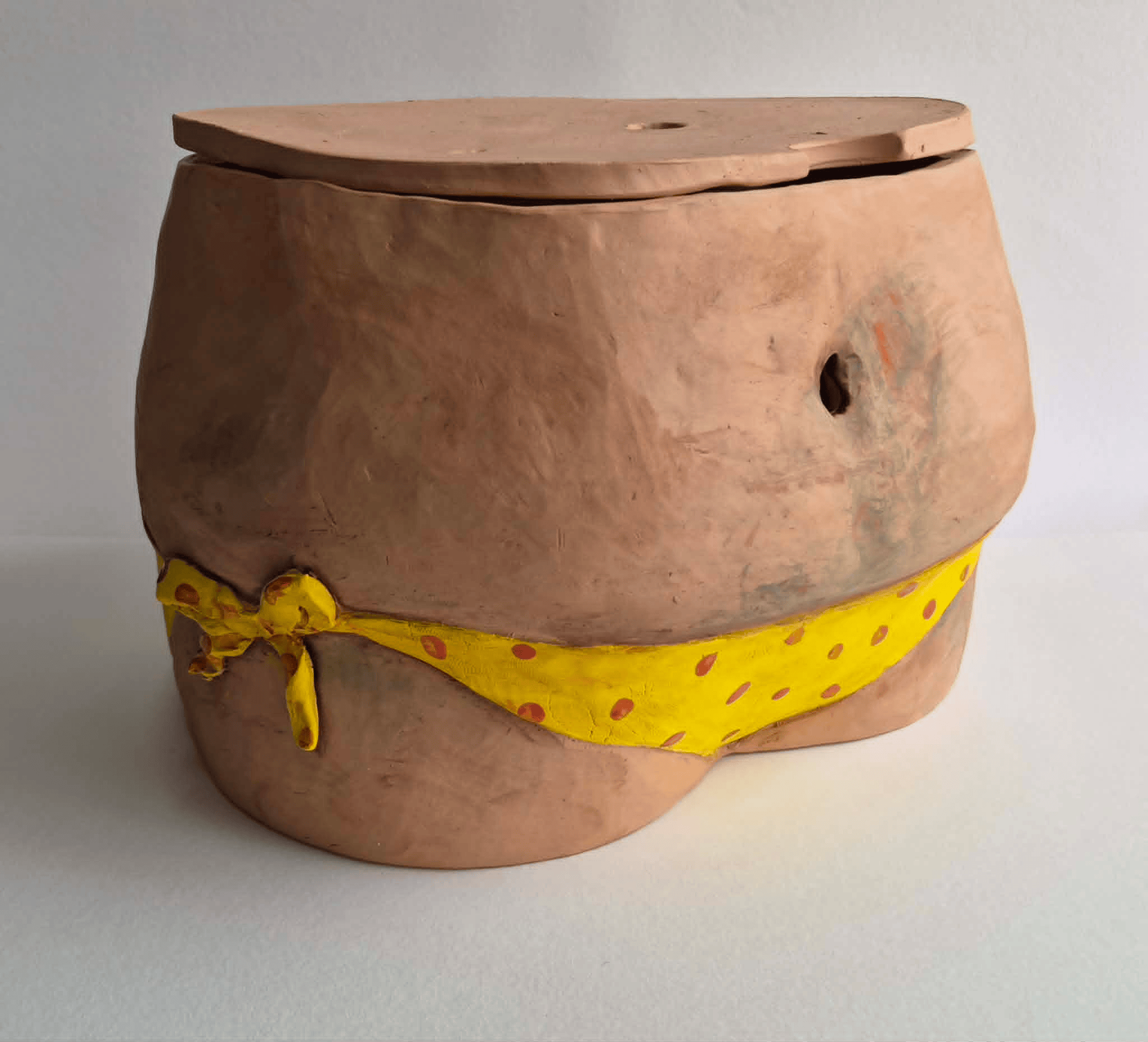
In Meanwhile, in HER Body, I explore the often-unspoken physical and emotional changes of perimenopause. The sculpture presents a recognizable female torso, while comic-book-inspired imagery inside the belly button reveals the unexpected changes occurring beneath the surface. Humor and familiar superhero imagery become a way to approach a subject that is frequently dismissed, misunderstood, or hidden from public conversation.
As a woman navigating midlife, I have become increasingly interested in bodily autonomy, women’s rights, and the experiences that shape our understanding of ourselves. I want my work to affirm that these experiences are real, that women deserve to be heard, and that no one should feel alone in navigating the changes or challenges of their body.
My ceramic wall hanging Personal Space explores the protective layers we build around ourselves. Its triangular tiles conceal traces of personal journaling beneath their glazed surfaces, creating a contrast between the beauty we present to the world and the private experiences we carry within.
Although these works take a different form from my paintings and drawings, they emerge from the same impulse: to preserve what matters and encourage people to look beyond the surface.
Making Space for other artists
My commitment to storytelling extends beyond my own studio. I am also an artist advocate, curator, educator, and community arts organizer who believes that artists deserve opportunities to share their work and connect with audiences.
My community arts work began when I approached a local library about exhibiting artwork because I wanted an outlet for showing art in my own community. That first effort grew into a broader commitment to creating exhibition opportunities for artists whose work might otherwise remain unseen.
Through my work with the Mansfield Commission for the Arts, including curating exhibitions at the Wallace Hall House Gallery and helping develop community pottery programming, I work to make art more accessible to both artists and audiences. I am particularly interested in creating opportunities for artists at different stages of their careers and for work that may be unconventional, handmade, quirky, or deeply personal.
I believe there is room for all of us. A thriving arts community should make space for different perspectives, experiences, materials, and approaches to making art.
Teaching pottery has reinforced that belief. Rather than asking students to create identical projects, I encourage them to make work that reflects their own interests and experiences. I have watched people who initially doubt their creativity discover a sense of pride and ownership when they create something personal. Helping people recognize their own creative voices is one of the most meaningful parts of my work.
Supporting other artists also keeps me connected to the community and its stories. Their creativity, perspectives, and willingness to share their experiences continue to inspire my own practice.
Art as a lasting connection
My professional work as a board-certified, registered art therapist and licensed professional counselor supervisor has deepened my understanding of the ways people communicate experiences that can be difficult to put into words. It has also strengthened my belief in the importance of listening, connection, and creating opportunities for people to be seen and understood.
My own life has included experiences of grief and loss that have shaped how I think about memory, legacy, and the importance of preserving the stories of those we love. I know how painful the thought of being forgotten can be, and how meaningful it is to have something that allows a person’s presence or experience to endure.
That belief informs both my artwork and my advocacy. When I paint a memory, create a sculpture about women’s experiences, teach a pottery class, or help another artist exhibit their work, I am participating in the same larger purpose: making room for stories that might otherwise go untold.
My artistic practice continues to evolve across two-dimensional and three-dimensional media, but the reason I make art remains constant. I want to preserve meaningful experiences, invite people to look more closely at the world around them, and create work that encourages connection.
I make art because our stories matter. I want the things we experience, the people we love, and the voices that are too often overlooked to have a place in the world—and a legacy that can live beyond us.